

Solace · Employee Handbook
Build a system that doesn't forget people
Solace
Role:
Service & Product Designer
Industry:
Humanitarian Technology
Scope:
Scanner, ID, App, Platform, Handbook
Team:
Siya Jain, Eugina Han, Kavya Ray
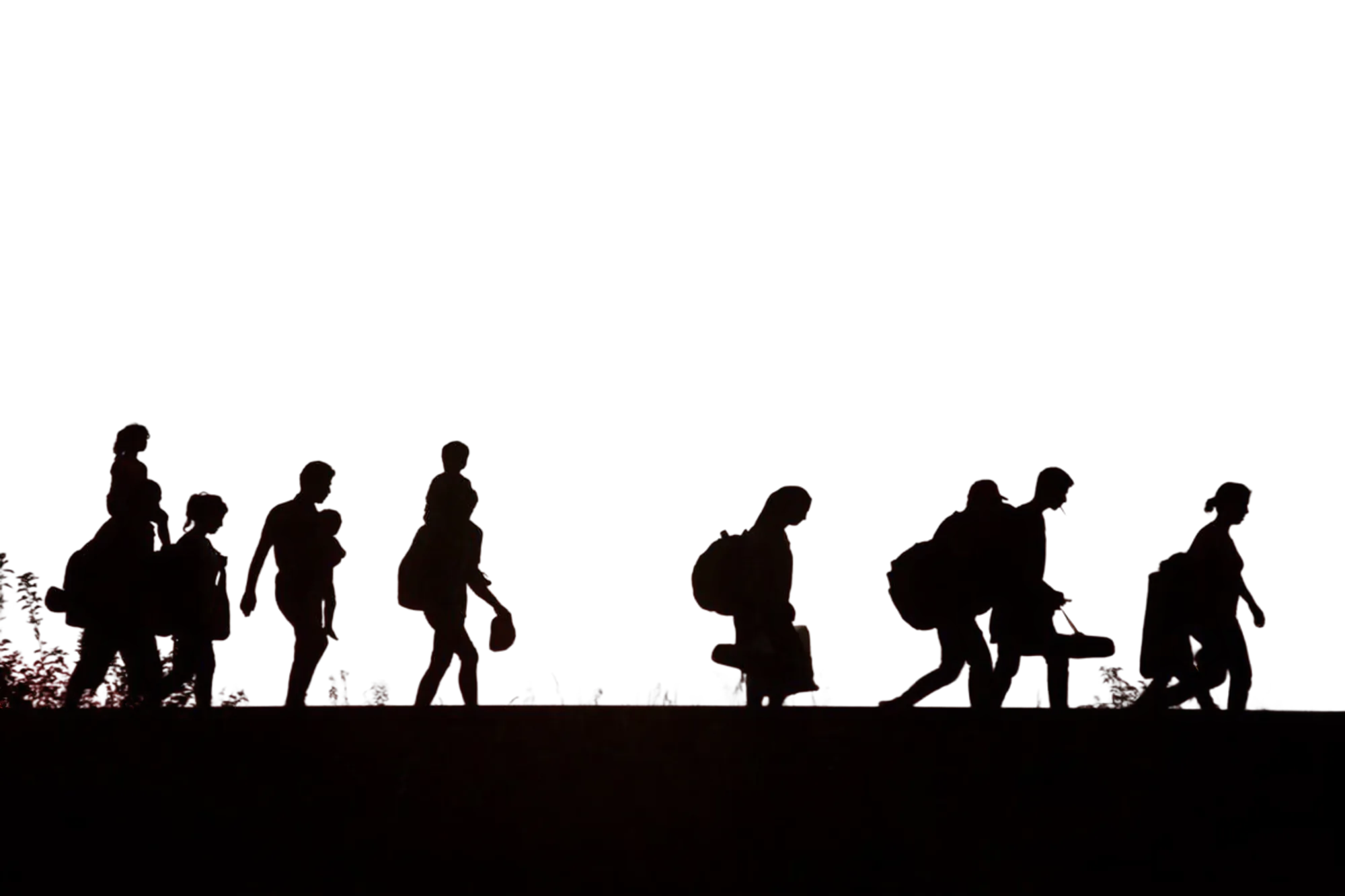
Refugee support systems are fragmented, so people repeat their story at every door. Solace is a connected set of tools, a scanner, an ID card, a caseworker app, and a case management platform, that gives each person one record that travels with them. This case study follows the orientation handbook we wrote to introduce caseworkers to the whole ecosystem.
Our philosophy
Built on trust, driven by transparency
And designed to provide reassurance at every step.

Company overview
The Problem
Refugee support systems are often fragmented, with case histories spread across multiple organizations, making continuity of care difficult.
01
Repeated intake
Individuals frequently go through intake again and again, causing unnecessary stress and delays.
02
No shared visibility
There is limited shared visibility into services and capacity, which makes coordination challenging.
03
Accountability gaps
As individuals move between providers, responsibility shifts, but accountability often does not, leading to gaps in support.
From the Solace Team

Siya Jain, Eugina Han, and Kavya Ray.
Solace was designed to support caseworkers navigating complex and fragmented systems where clarity, continuity, and coordination are essential. The system recognizes that the refugee journey is not linear, and that individuals often move across multiple organizations and points of care.
It is not just a tool for managing information, but a system intended to reduce confusion, prevent gaps in care, and create a more consistent experience. Many people entering this system are navigating uncertainty and unfamiliar processes, where even small moments of clarity can make a meaningful difference.
While the system provides structure, it is the way it is used that shapes the experience. The goal is not only efficiency, but ensuring that each interaction reflects care, clarity, and respect for the individual behind the case.
Understanding the person
The Refugee Journey
The journey is not linear, and it rarely stays with one organization. Step through it.
- Fleeing Home
- Transit Centers
- Refugee Camps
- Legal Processing
- Integration
- Continuity
01 / 06
Fleeing Home
Conflict, violence, and persecution force individuals to leave everything behind.
The system
The Solace Ecosystem
Together, these tools create a shared system of record that travels with the individual, not the organization.
01
Document Scanner
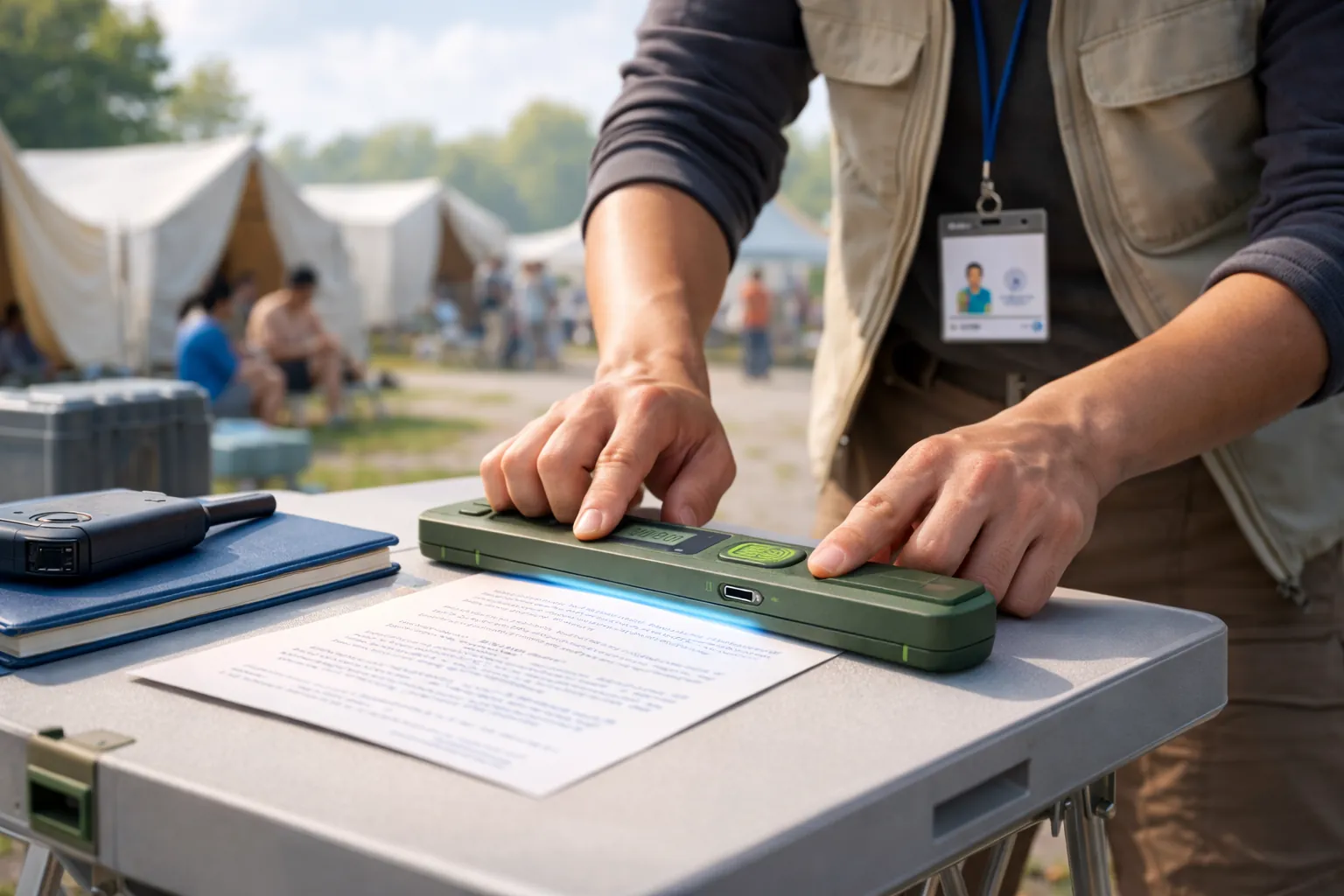
Secure, portable intake scanner that transforms physical refugee documents into a verified, interoperable digital identity record.
See how it works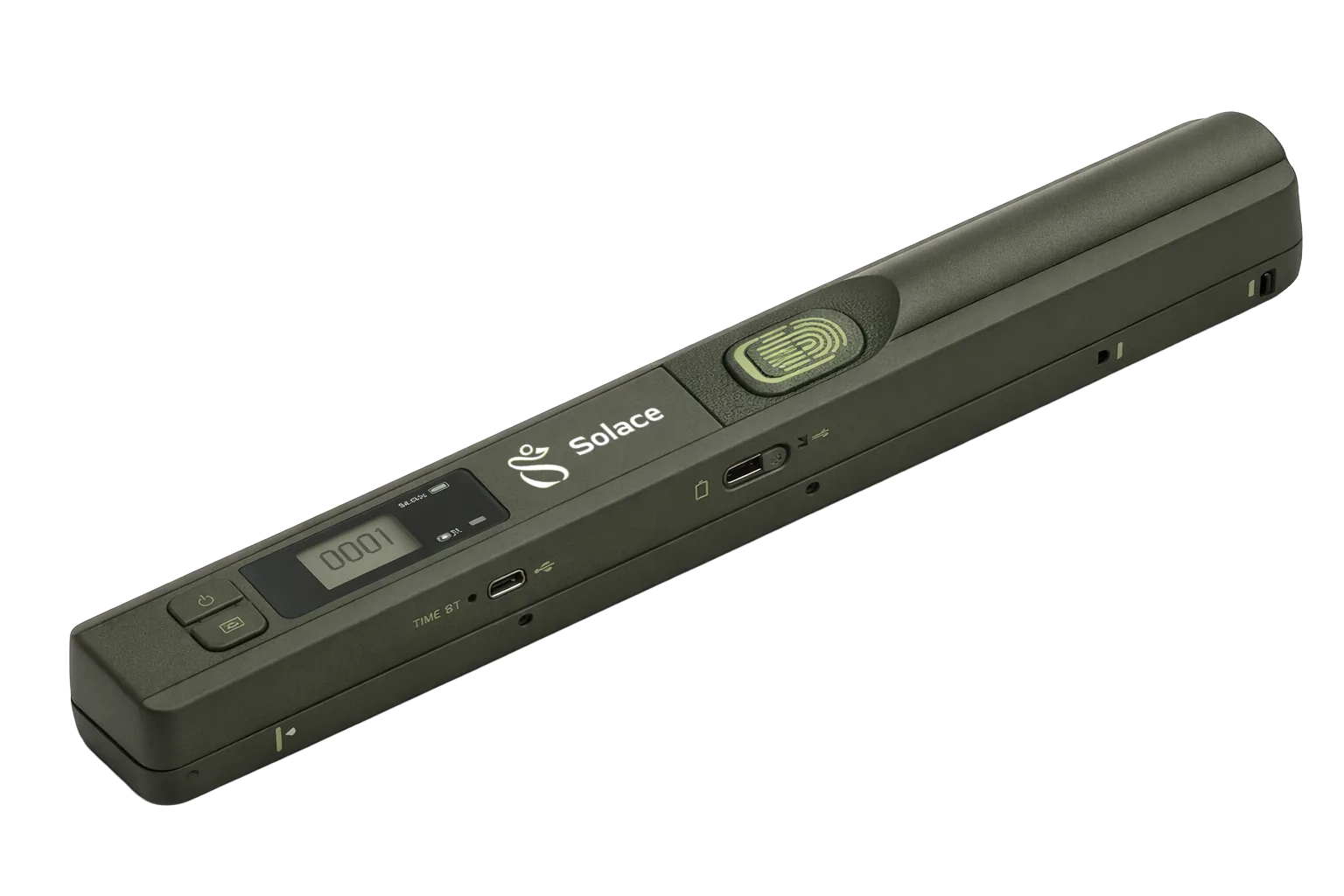
02
Identification Card
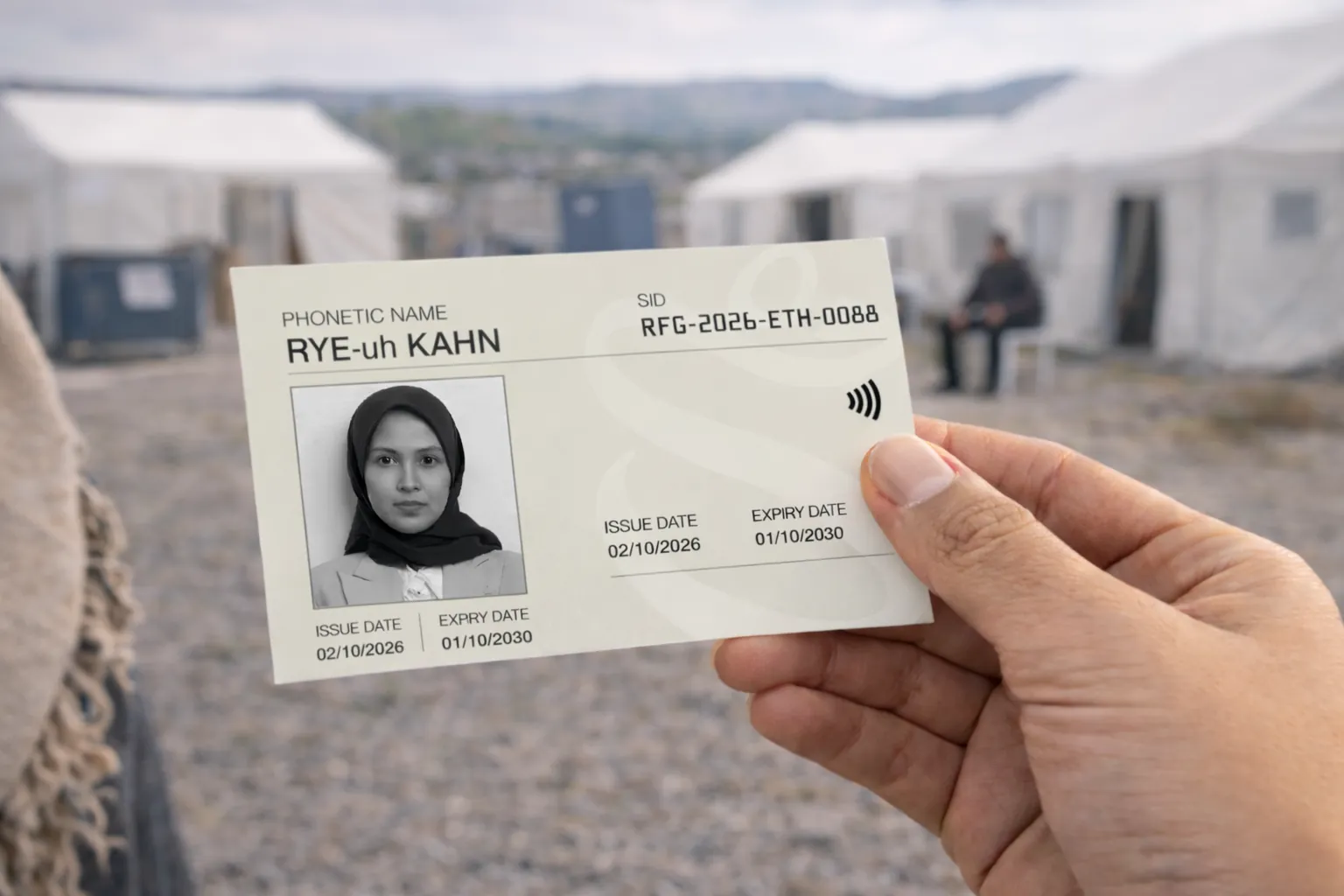
A cryptographic identity credential that ensures identity and case history don't reset at every transition, while preserving dignity across agencies and stages of resettlement.
See how it works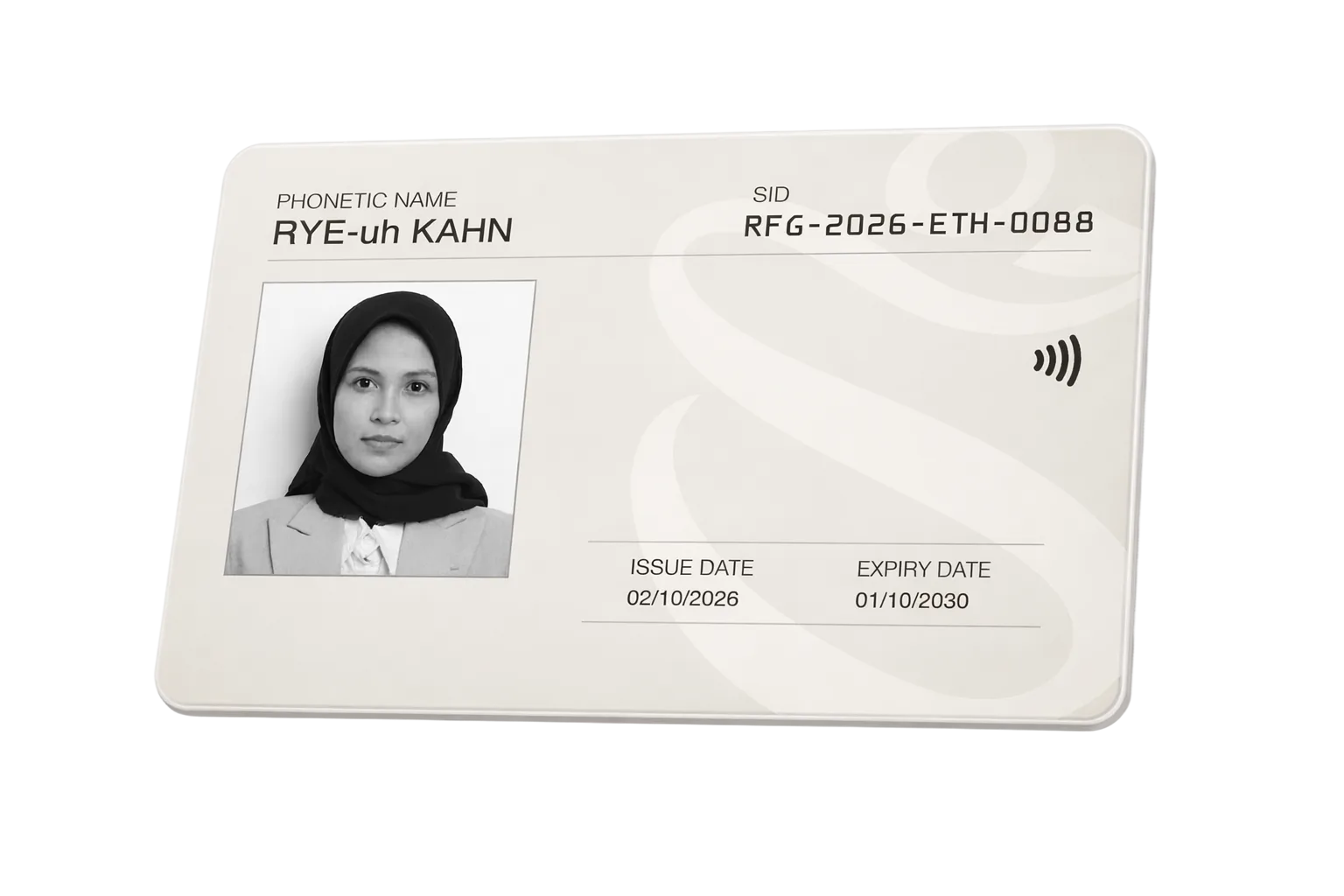
03
Case Management
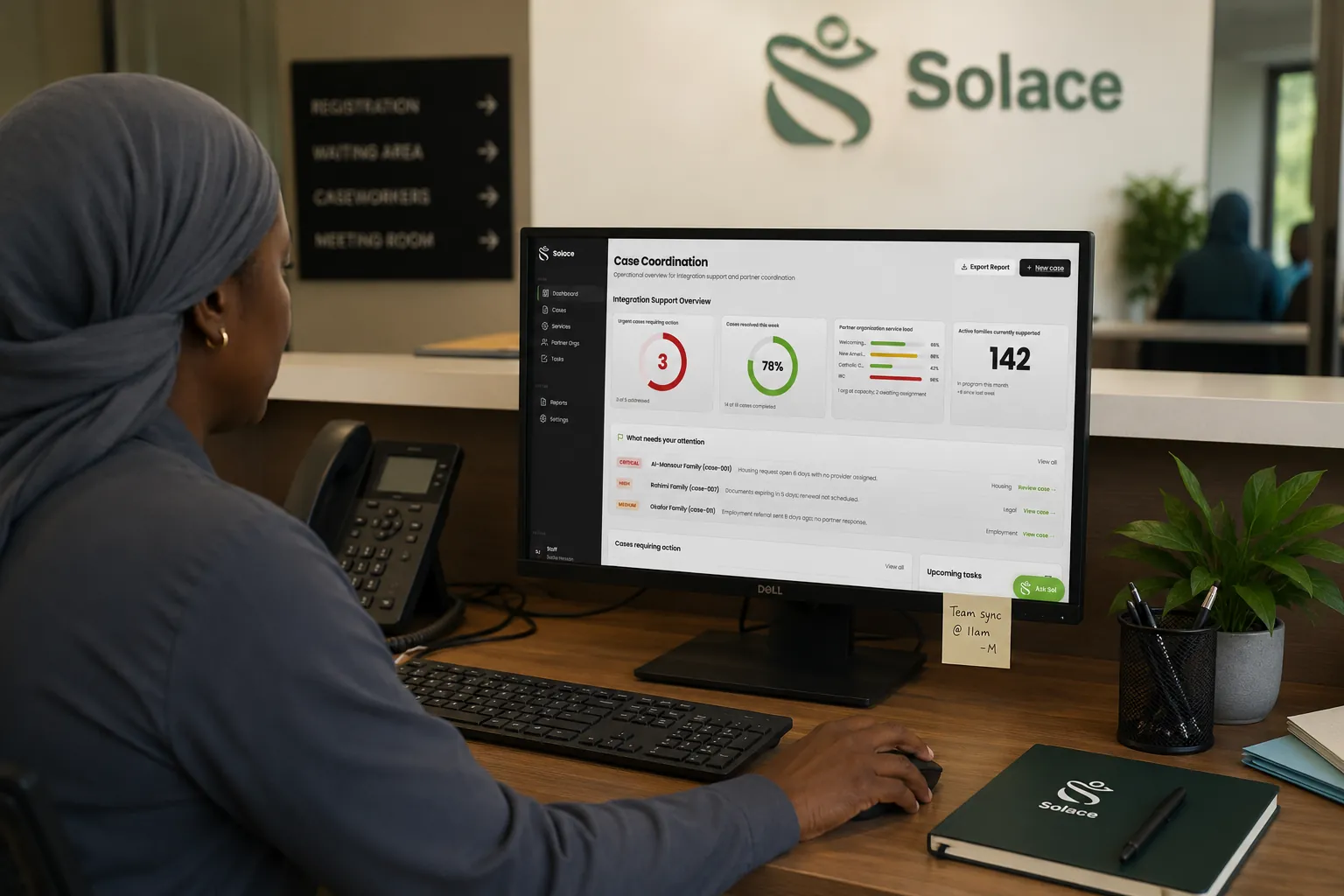
A web platform that enables NGOs to connect case histories with real-world services, creating shared visibility into needs, capacity, and follow-up for coordinated, long-term support.
See how it works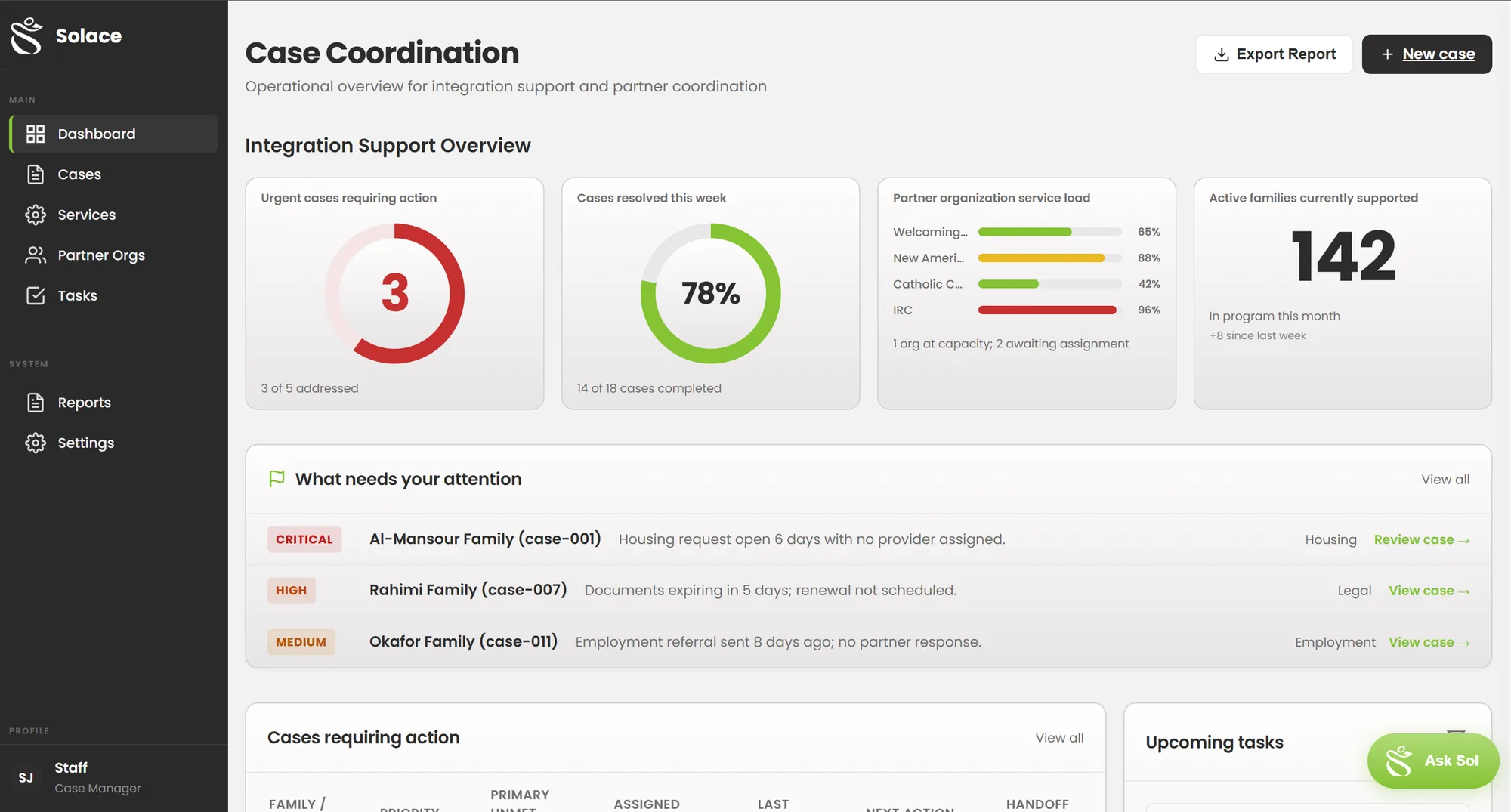
01 · Capture
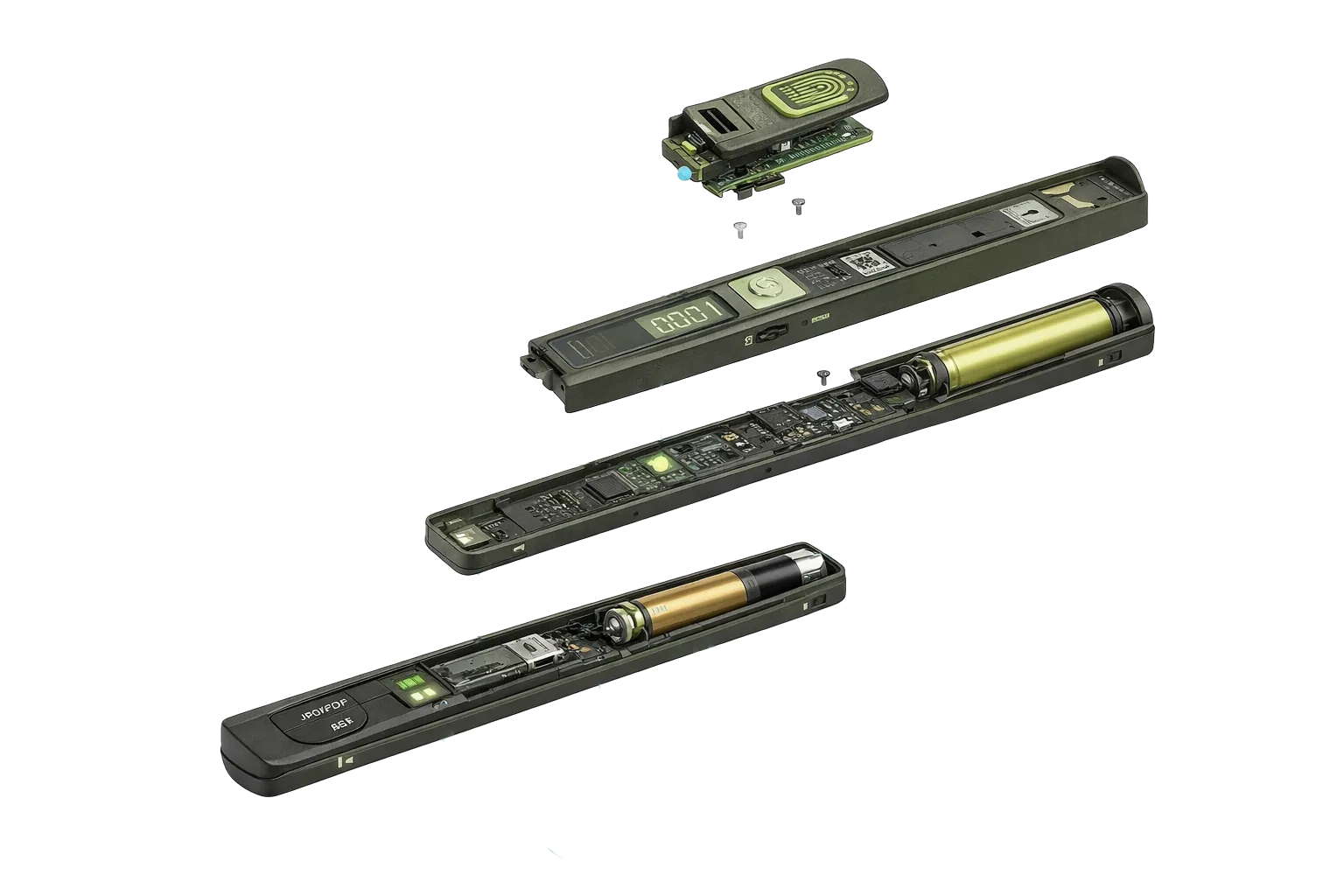
Solace Scanner
A portable intake scanner for the field. Point at any part of the exploded view to see what it does.
How the scan works
Offline-first secure sync
The scanner cannot start intake or unlock stored scans without biometric authentication.
Optical character recognition
AI is used to detect language, extract and correct text, and route uncertain cases to human reviewers.
02 · Preserve
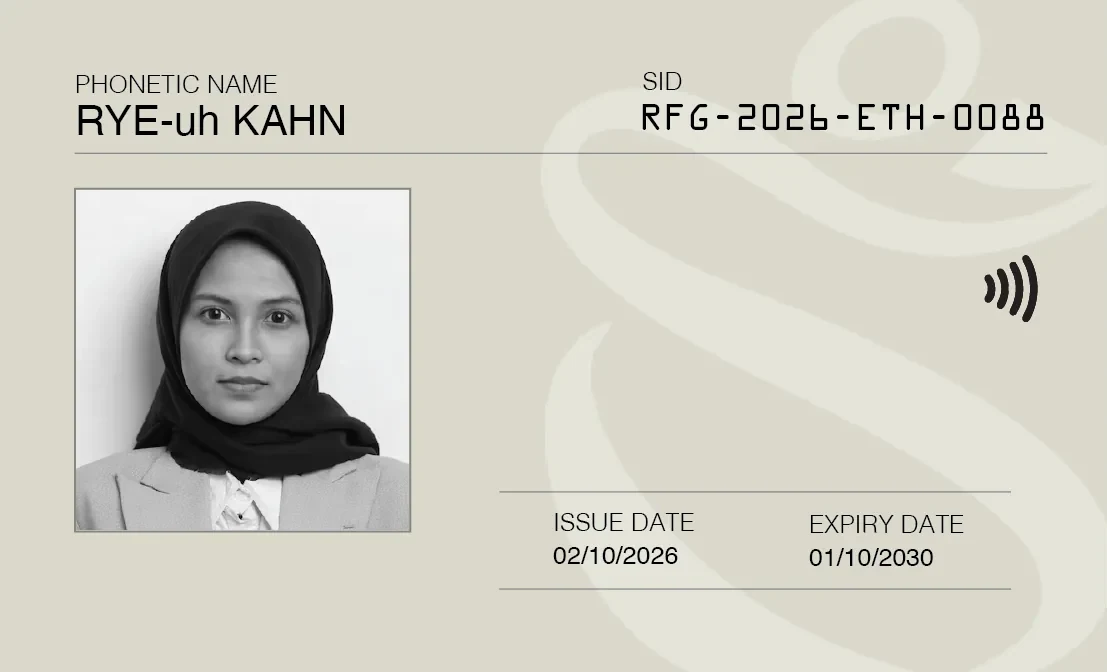
Solace ID
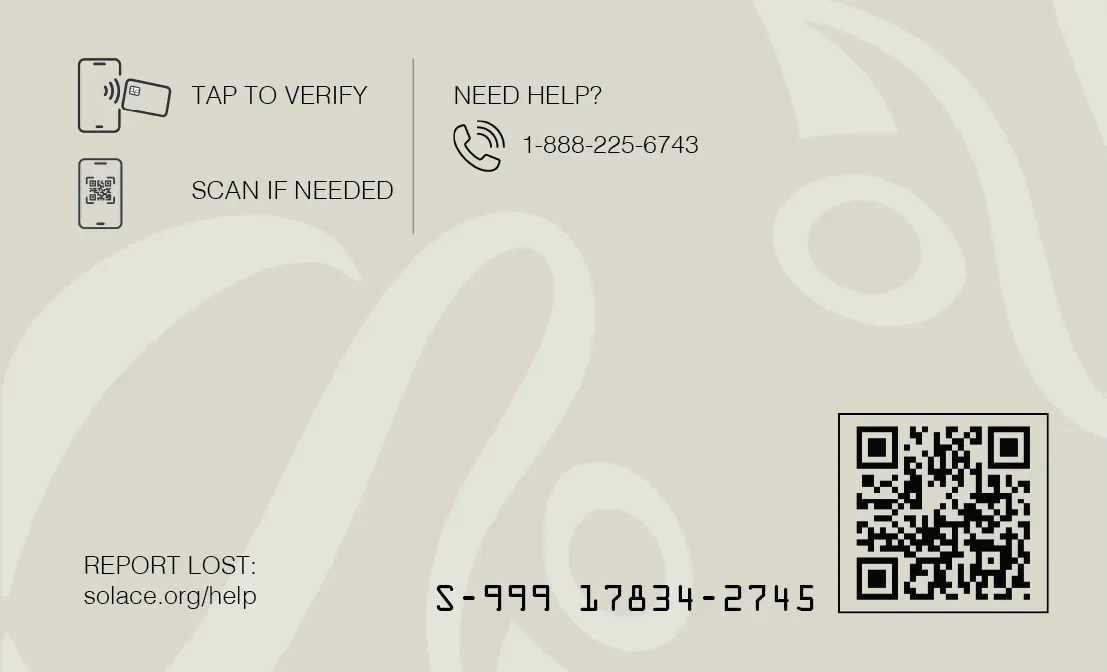
A card that has to work for someone with no phone, no common language, and no patience for another form. Flip it and look at every part.
What happens during a tap?
Secure tap authentication
Powered by NXP MIFARE DESFire EV3 NFC smart card technology, enabling encrypted tap verification between the S-ID and authorized caseworker devices.
Privacy-preserving architecture
Only an AES-256 encrypted identifier is stored on the card.
Persistent identity continuity
A unique encrypted SID links all records to one consistent identity.
Durable for field conditions
A rugged smart card built for high-frequency use with a variety of NFC readers in camp environments.
03 · Connect
Case Management Platform
Where caseworkers across organizations see the same case, the same history, and the same next step.
Hover to zoomHow the dashboard works
The S-PASS protocol
Information lost in handoffs
Adapted from the I-PASS medical handoff protocol, in healthcare settings.
Record locked for the receiving agency. 0 of 5 S-PASS steps done.
Every agency-to-agency transfer requires a completed S-PASS before the receiving agency gains edit access. Tick the steps to try it.
On the caseworker's phone
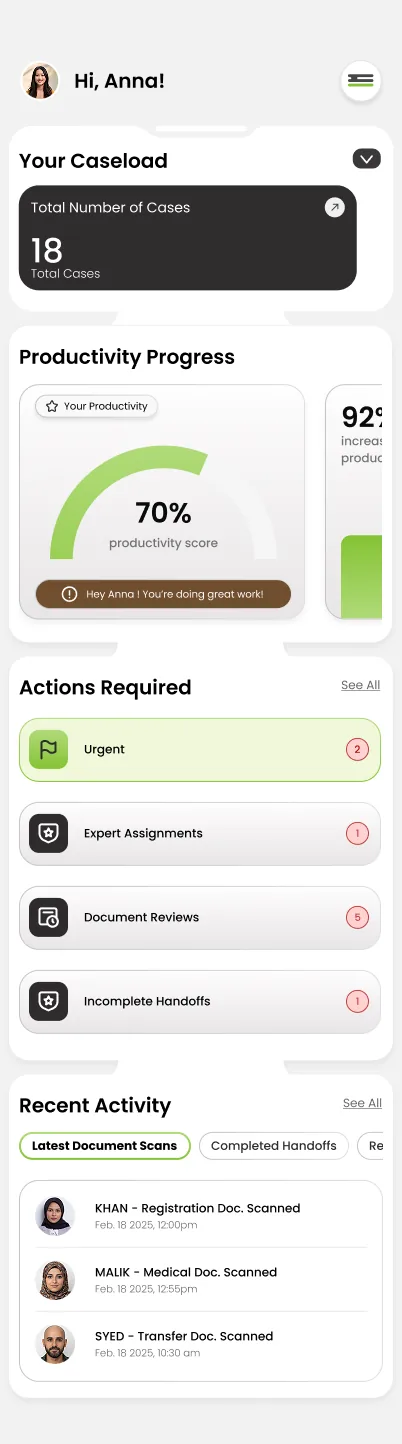
Solace App
Caseworker Dashboard
Provides visibility into caseload, task progress, and performance to help caseworkers manage their work and prioritize effectively.
Scroll inside the phone
Founding principle
Security & Data
Security and privacy are foundational to Solace. All data is securely stored, encrypted, and shared only with authorized organizations, so sensitive information is protected at every stage.
End-to-End Protected
All data is encrypted at rest and in transit. Document images are stored separately and require additional authorization to access.
Immutable Log
Every action is logged, including who scanned the document, when, on which device, and any changes made. Logs cannot be edited or deleted.
Jurisdiction Aware
Data can be hosted in-country to meet legal requirements and cannot leave the jurisdiction without authorization.
Designed Against Harm
All government data requests are logged and reviewed, and bulk data exports require multi-party approval.
“Behind every system is a person. Designing with care means protecting both.”
In use
Usability
Solace Scanner
Intake and field use
Caseworkers begin at intake, where accuracy and speed are critical. Using the Solace Scanner, documents are digitized in real time, reducing manual entry and eliminating repeated intake across organizations.
At this stage, caseworkers establish a reliable foundation, turning fragmented paperwork into structured data that supports continuity from the start.
Build a system that doesn't forget people